Latest posts
-
Can AI Cross Check Electrical Design Documents?

Electrical design review often involves more than checking whether one document is correct. The real challenge is making sure multiple documents agree with each other. A breaker rating may be updated on the Single-Line Diagram but remain unchanged in the panel schedule. A cable size may be different between the drawing and the cable schedule.…
-
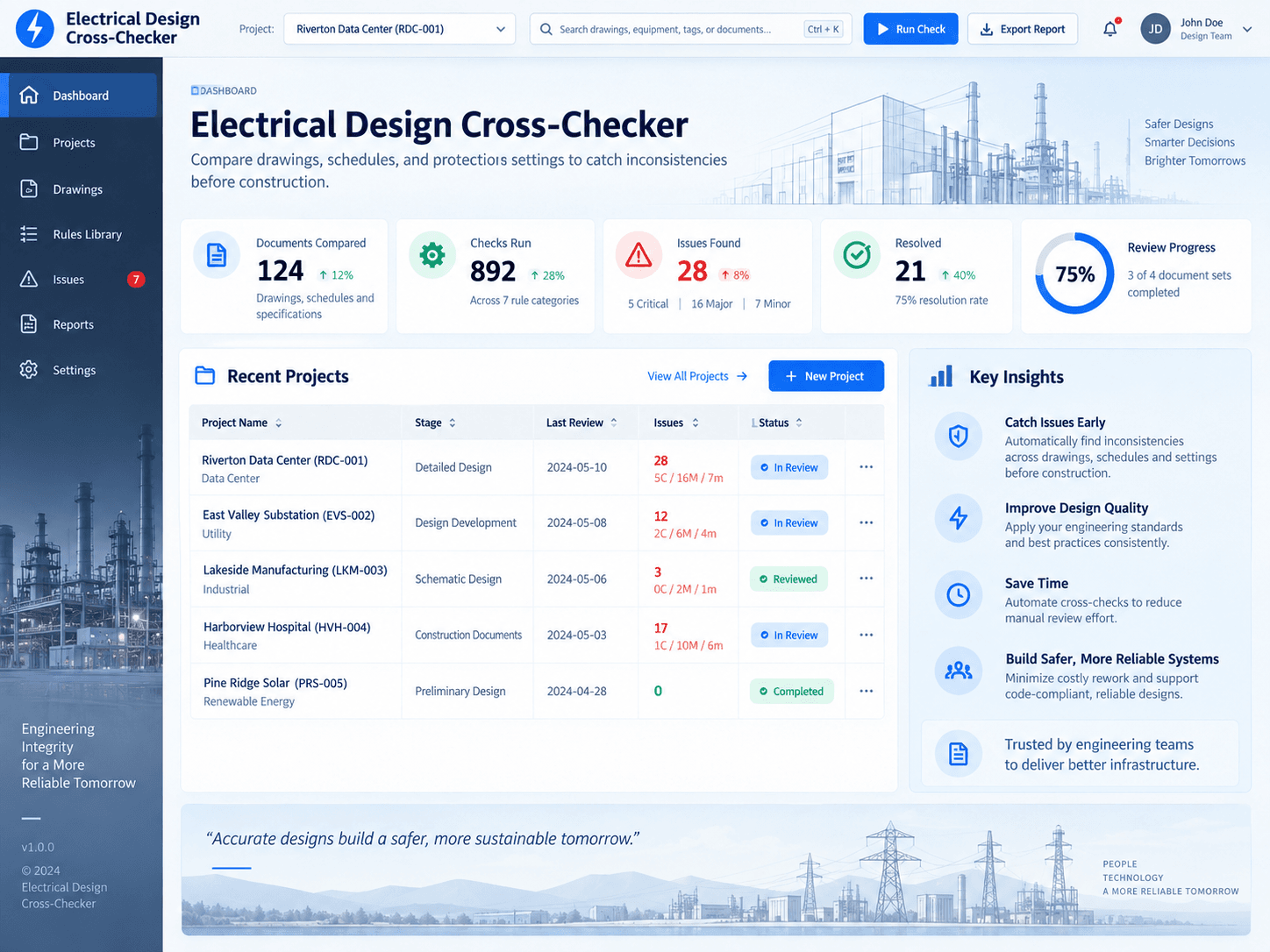
Electrical Design Cross-Checker: What If Design Documents Could Check Each Other?

Electrical design reviews rarely fail because one document is completely wrong. More often, the problem is simpler. The documents do not agree with each other. A breaker may be shown as 400 A on the Single-Line Diagram but 600 A on the panel schedule. A cable size may be updated in the cable schedule but…
-
When You Look at a Single-Line Diagram, Ask This Question

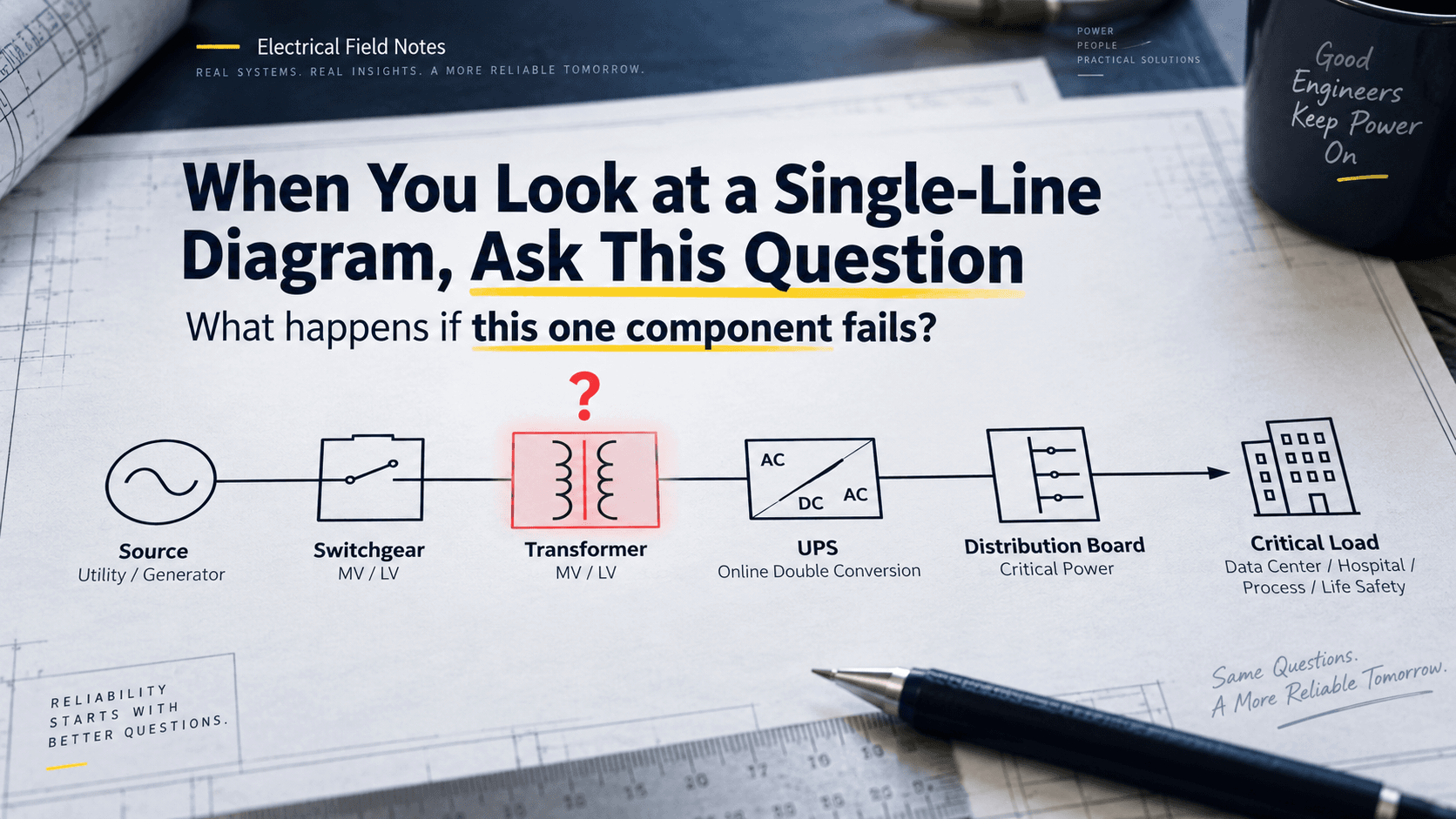
When I look at a single-line diagram, I usually start with familiar things. Where does the power come from? How is it distributed? What is the transformer capacity? Which breaker protects which feeder? But there is another question worth asking. What happens if this one component fails? That simple question can change the way we…
-
Why Are UPS Systems Operated in Parallel?
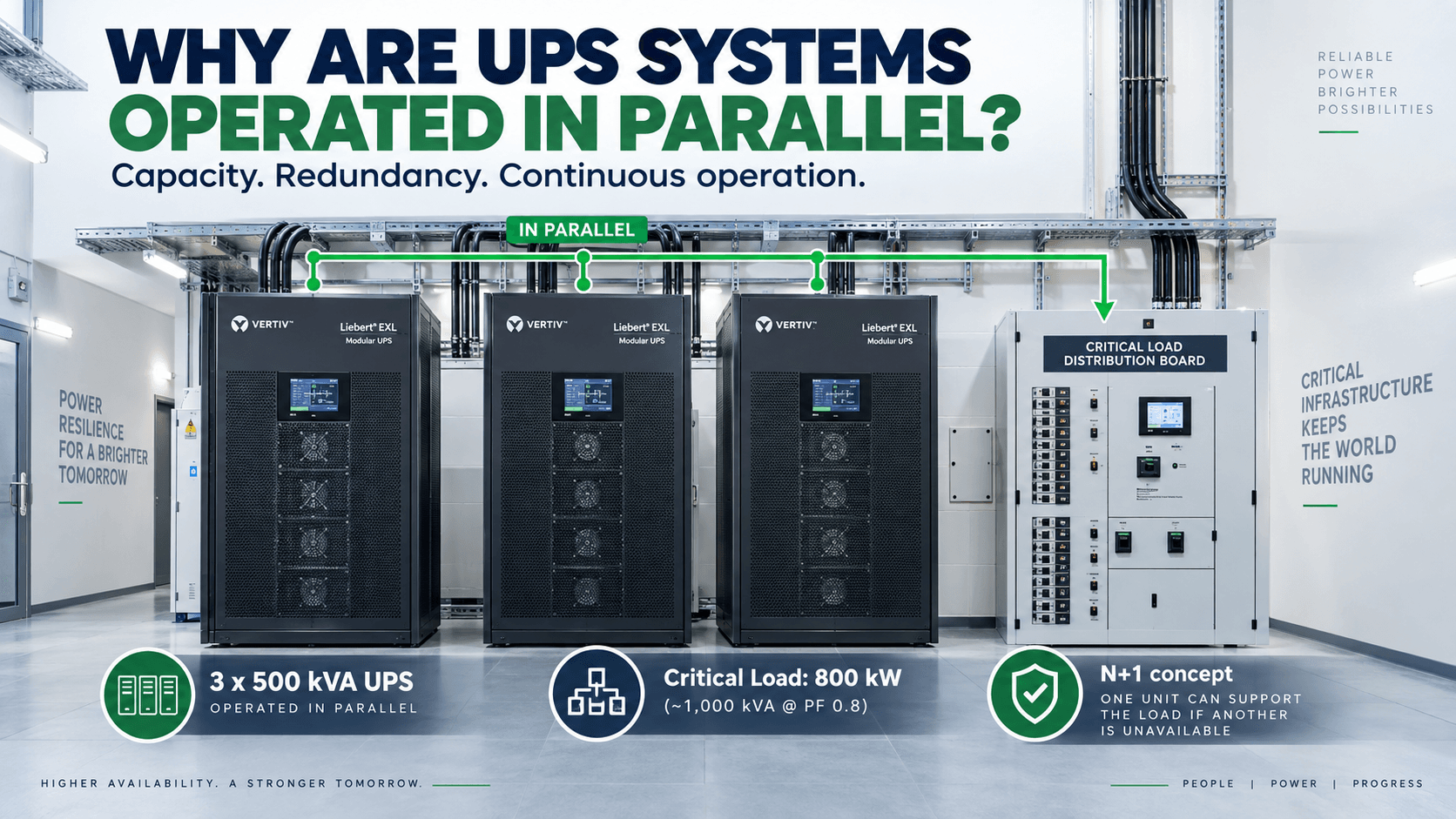
When I first looked at a large UPS system, one question seemed obvious. Why use several UPS modules in parallel instead of one large UPS? The first reason is simple. Capacity. If one UPS module cannot support the required critical load, several UPS modules can operate together and share the load. But in critical power…
-
What Happens Between a Power Failure and Emergency Generator Power?
When normal power disappears, emergency generator power does not appear instantly. There is a short sequence of events between the two. Understanding that sequence helps explain why emergency loads may stay de-energized for several seconds after a power failure. 1. Normal Power Is Lost The first event is simple. The normal utility or incoming power…
-
Why Electrical Engineers Should Look at the Pump Curve
While reviewing a centrifugal pump datasheet and performance curve, I noticed something that made me stop for a moment. The pump BHP was quite close to the selected motor HP. At first, this may look like a mechanical engineering issue. A pump datasheet belongs to the mechanical discipline. A pump performance curve is usually reviewed…
-
Single-Line vs. Three-Line Diagrams: What Each One Is Actually For

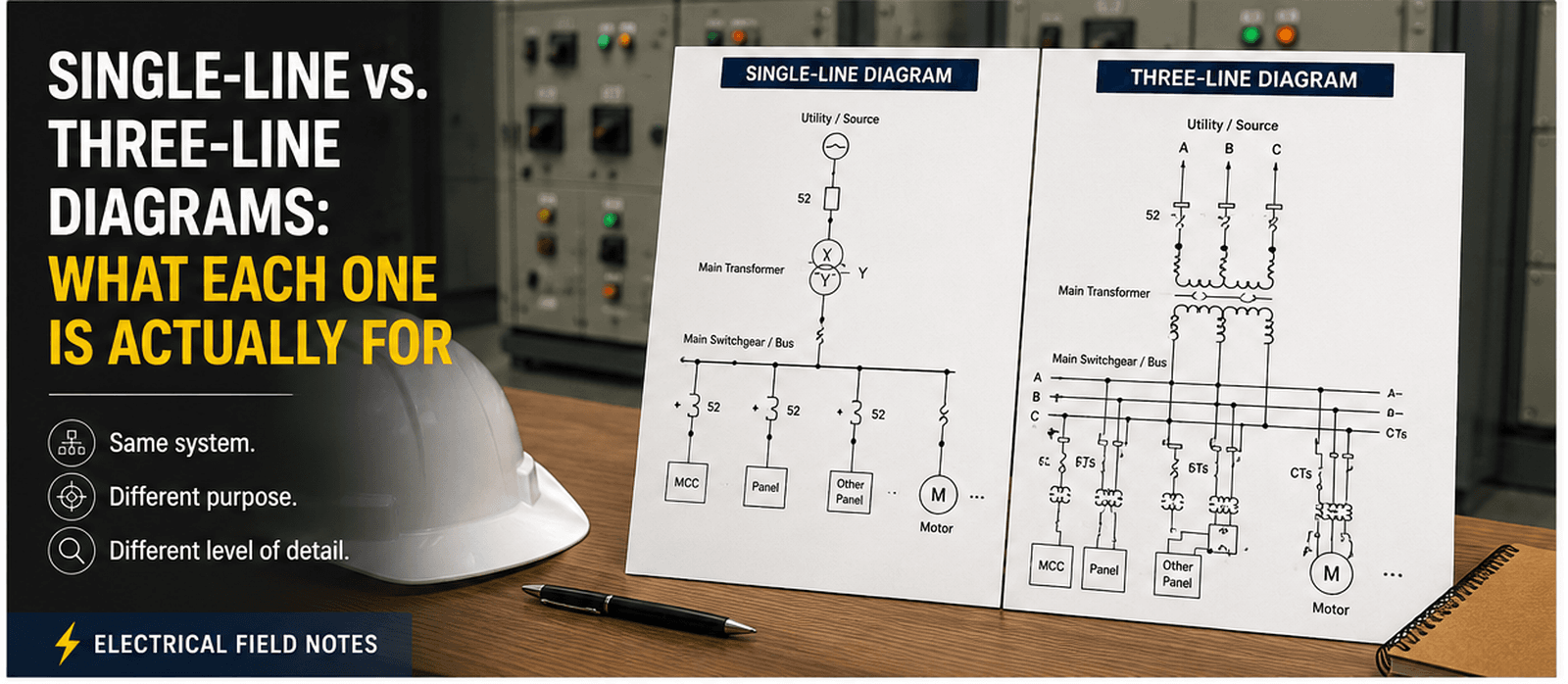
I was looking at an electrical drawing and realized something simple. A single-line diagram and a three-line diagram may describe the same electrical system. But they are not trying to answer the same question. If I want to understand: “Where does the power come from, and where does it go?” I open the single-line diagram.…
-
What I Check After an MCC Main Breaker Trip
An MCC main breaker trip changes the situation immediately. Several motors stop at once. Operators want the equipment back. Production pressure starts building. And one question usually comes quickly: “Can we reset the breaker?” My first response is usually: Not yet. First, find out why it opened. A breaker reset is easy. Understanding what caused…
-
Can You Trust the Label on an Electrical Panel?

The breaker label says: PUMP-XXX The panel schedule says the same thing. So the circuit must feed Pump-XXX. Right? Not necessarily. Panels change. Loads move. Temporary wiring becomes permanent. Old equipment is removed. New equipment gets connected. And sometimes the label is the only thing that never gets updated. That is why I treat a…
-
The Temperature Sensor Was Accurate. The Measurement Was Still Wrong.
The temperature reading looked wrong. So we checked the sensor. The RTD was removed, tested, and compared with a reference. It was accurate. The transmitter was also fine. But after reinstalling everything, the process temperature still did not make sense. That is when the question changed. Was the sensor measuring temperature incorrectly? Or was it…