Latest posts
-
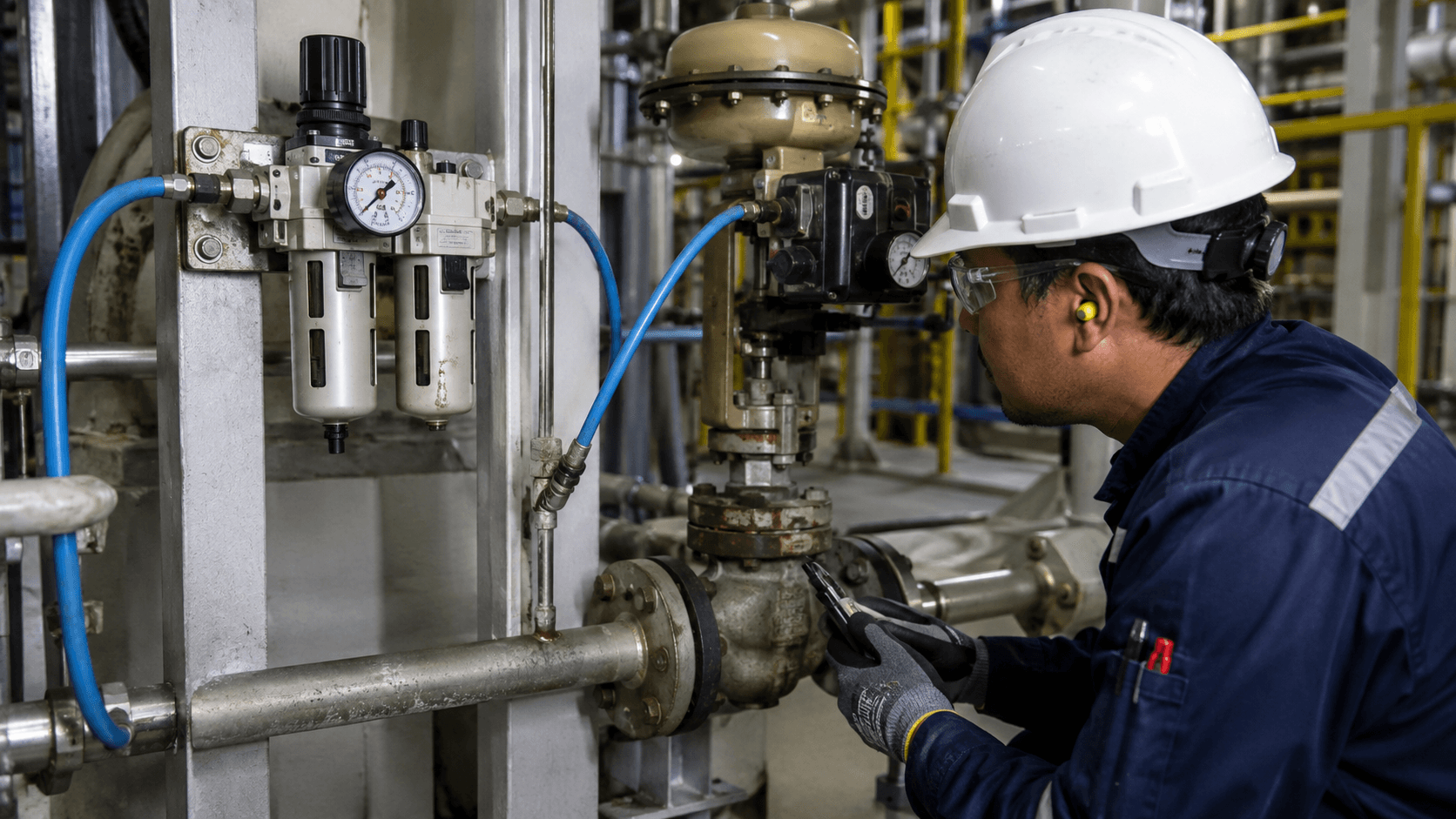
The Solenoid Was Energized. The Valve Still Did Not Move.

The valve received an Open command. The PLC output was ON.The output module LED was ON.The correct voltage was measured at the solenoid coil. But the valve did not move. At this point, replacing the solenoid coil can feel like the fastest answer. Sometimes it works. Sometimes it only replaces the one part that was…
-
The Interlock Was Clear. The Machine Still Would Not Start.
The operator pressed the start button. Nothing happened. The HMI showed no active trip.The interlock summary was clear.The motor was available. So the start button was pressed again. Still nothing. This is where troubleshooting often becomes confusing. If there is no active interlock, why will the machine not start? Because “no trip” does not mean…
-
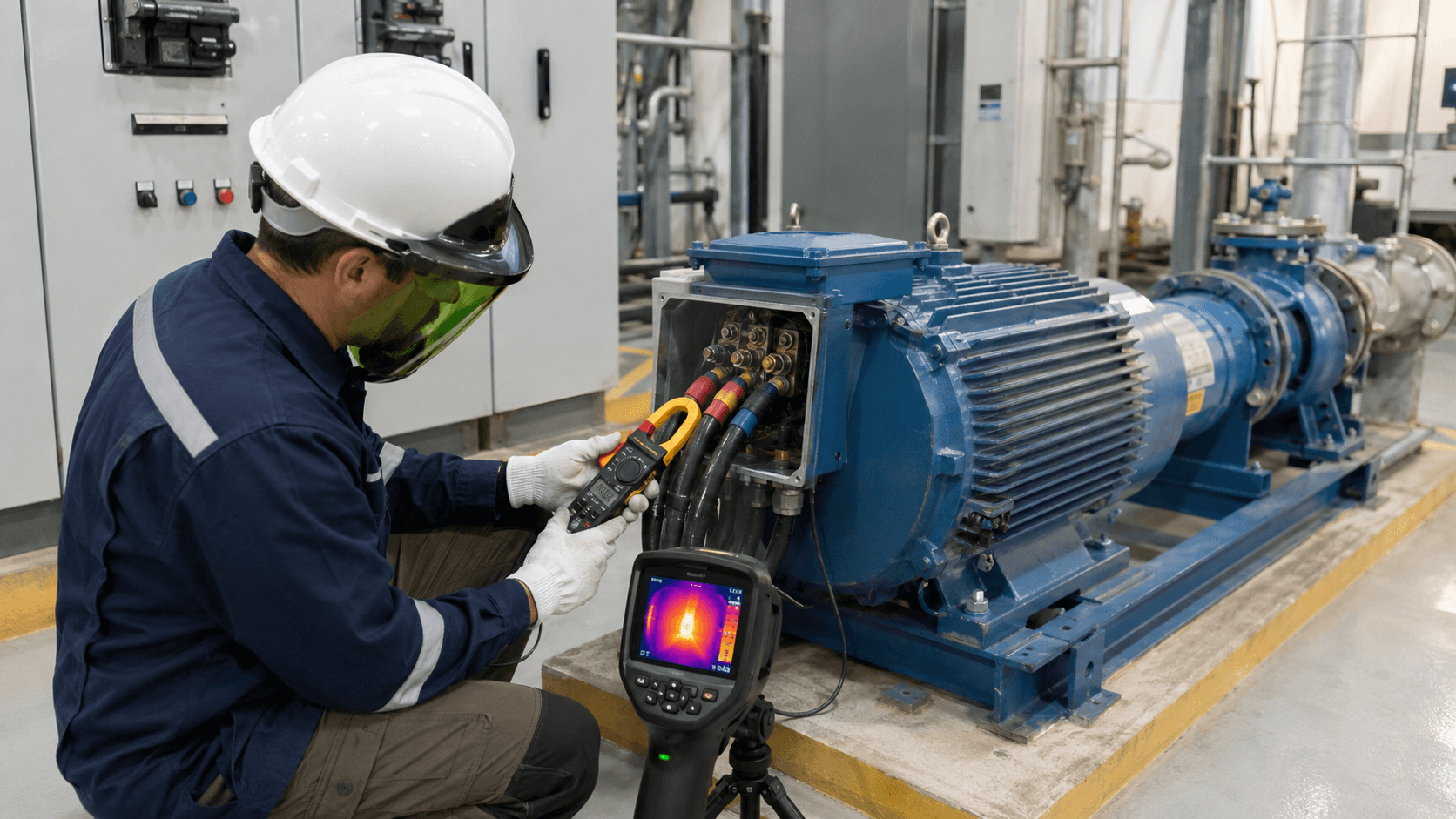
The Motor Current Was Normal. The Motor Was Still Overheating.
The motor was running. The current looked normal. No overload trip.No obvious phase imbalance.Nothing on the meter that made people panic. But the motor housing was too hot to ignore. This is a common troubleshooting trap. When a motor overheats, current is often the first thing we check.And that makes sense. But normal current does…
-
Cables Passed the Test. But Still Failed Under Load.
A motor feeder trips after several minutes of operation. The cable is disconnected and tested. Phase to phase: good.Phase to ground: good.The insulation resistance is well above the expected minimum. The circuit is energized again. Ten minutes later, it trips. At this point, the cable is often removed from the suspect list. That can be…
-
We Replaced the Relay. The Fault Came Back the Next Day.
Replacing a component can remove the symptom—and hide the evidence. The machine stopped unexpectedly. The control relay was the obvious suspect. Its output was unstable, and the equipment restarted after the relay was replaced. The job looked finished. Then the same fault returned the next day. This is one of the most frustrating situations in…
-
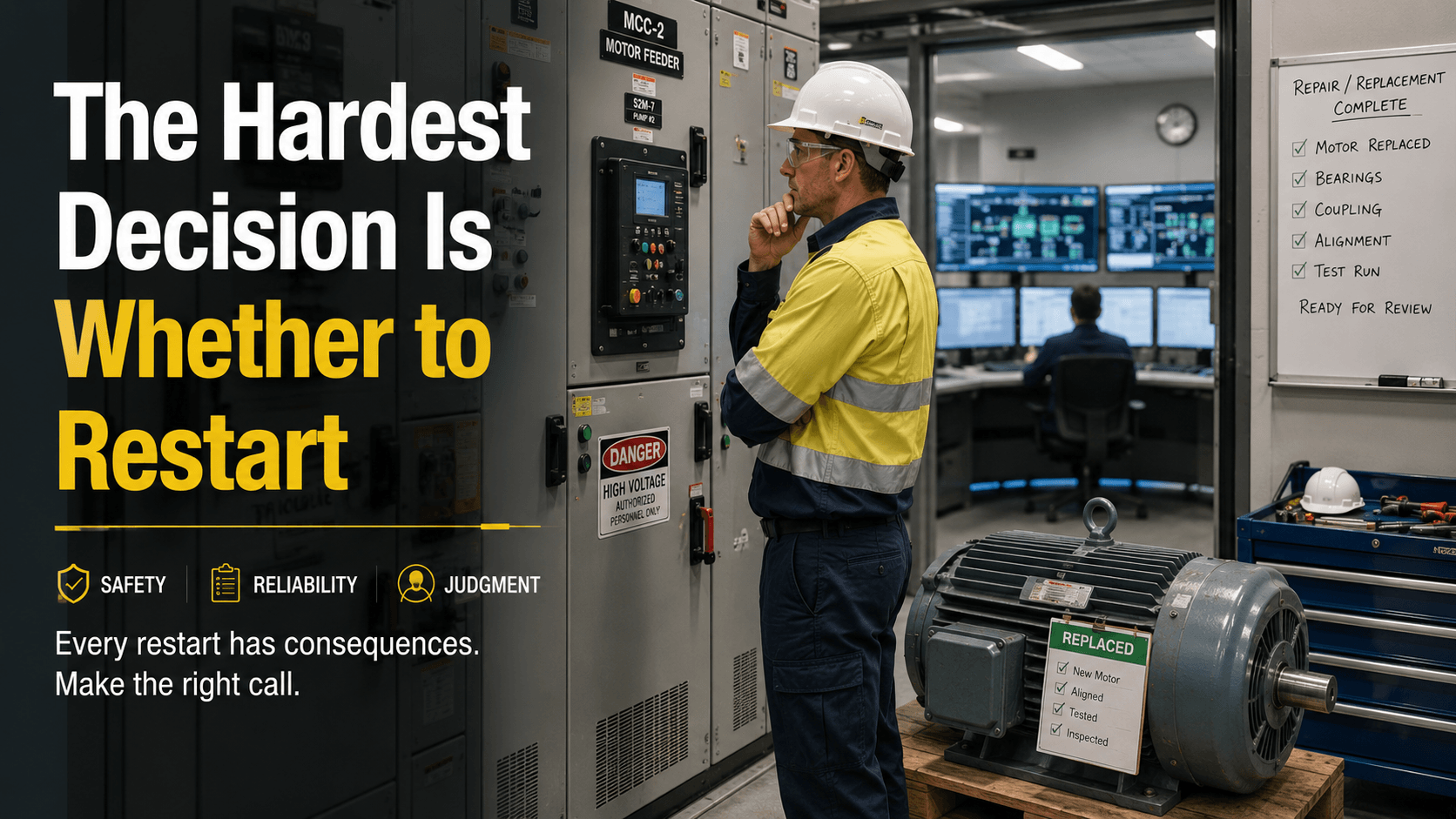
The Hardest Decision Is Whether to Restart
The failed motor had been replaced. The insulation resistance was acceptable. The breaker was ready to close. Then the operator asked: “Can we restart now?” That is often the hardest question after an electrical failure. Finding a damaged component may be straightforward. Replacing it may also be straightforward. Deciding whether the system is safe to…
-
One Cable Route Can Defeat an Entire Redundancy Design
Two sources. Two breakers. Two cables. On the drawing, the system looked reassuring. It had the kind of words engineers and managers like to hear: redundant, dual-fed, backup available, improved reliability. But during one walkdown, I noticed something that changed how I looked at the whole arrangement. Both cable routes entered the building through the…
-
The Breaker Is Rated Correctly. But Will It Trip in Time?
A small motor failed. The motor feeder should have isolated the fault. Instead, the main breaker opened. A much larger section of the plant lost power because of a fault that began at one relatively small piece of equipment. When we reviewed the system afterward, the breaker ratings did not immediately look wrong. The feeder…
-
The DCS Says the Valve Is Open. The Process Says Otherwise.
The DCS showed the valve at 100% open. But the flow did not increase. The pressure did not change. From the control-room screen, the valve appeared to be doing exactly what it had been asked to do. From the process side, however, nothing seemed to be happening. This is the kind of situation where one…
-
Rainy Season in the Electrical Room: What I Check Before Humidity Becomes a Failure
Korea is in the middle of jangma right now. For readers outside Korea, it is our annual rainy season: long periods of rain, high outdoor temperature, and air that already feels wet before you step outside. Every year, as this season approaches, I become more sensitive to the condition of our electrical rooms and rack…