
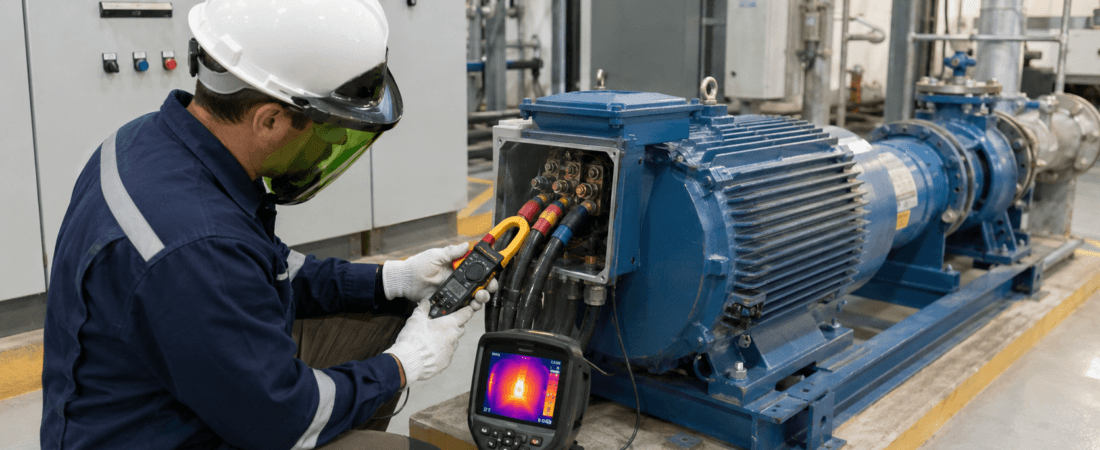
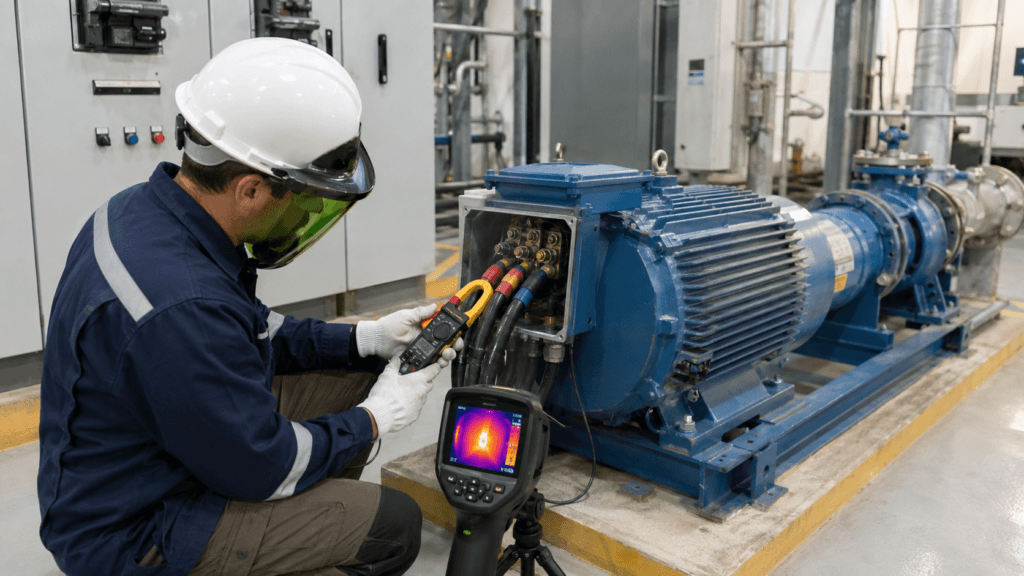
The motor was running.
The current looked normal.
No overload trip.
No obvious phase imbalance.
Nothing on the meter that made people panic.
But the motor housing was too hot to ignore.
This is a common troubleshooting trap.
When a motor overheats, current is often the first thing we check.
And that makes sense.
But normal current does not guarantee normal motor temperature.
It only tells us part of the story.
Current Is Important. But It Is Not the Whole Story.
Motor heating depends on two sides:
- How much heat is generated
- How effectively that heat is removed
Current helps us understand the first part.
It does not fully explain the second.
A motor can run at normal current and still overheat when cooling is poor, ambient conditions are harsh, or mechanical problems are adding stress without creating an obvious overcurrent condition.
That is why “current is normal” should never be the final conclusion.
It should be the start of the next question.
What Normal Current Does Not Rule Out
1. Cooling Fan Problems
Many motors depend on their own cooling fan.
If the fan is damaged, loose, missing, or rotating ineffectively, the motor may not remove heat properly even though the electrical load looks acceptable.
Check for:
- Broken fan blades
- Loose fan mounting
- Blocked fan cover
- Dirt buildup on air passages
- Reduced airflow
The motor may be electrically acceptable and thermally unhealthy at the same time.
2. Low-Speed Operation on a VFD
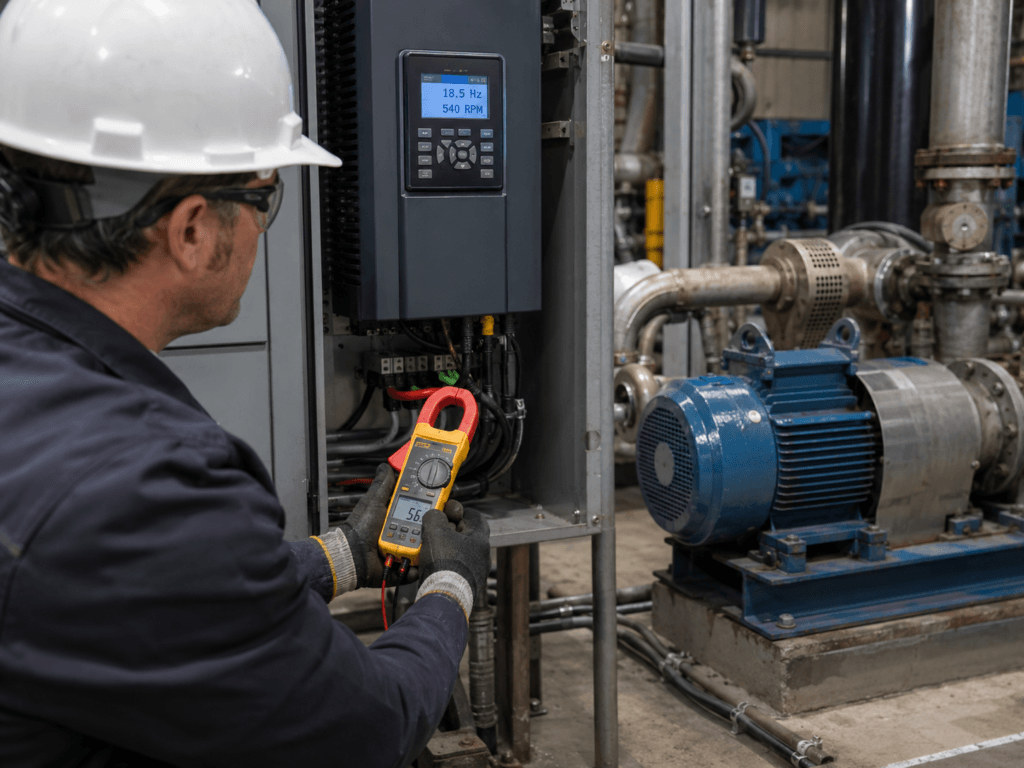
This is one of the most common field causes.
When a motor runs at low speed on a VFD, the shaft-mounted fan also turns more slowly.
That means less airflow.
The motor may be carrying normal current for the load, but it is no longer cooling the way it would at full speed.
This becomes more critical when:
- The motor runs continuously at low speed
- Ambient temperature is high
- The load is steady and prolonged
- The motor was not selected for low-speed high-torque duty
A motor that is happy at 60 Hz may struggle thermally at 20 Hz.
3. High Ambient Temperature
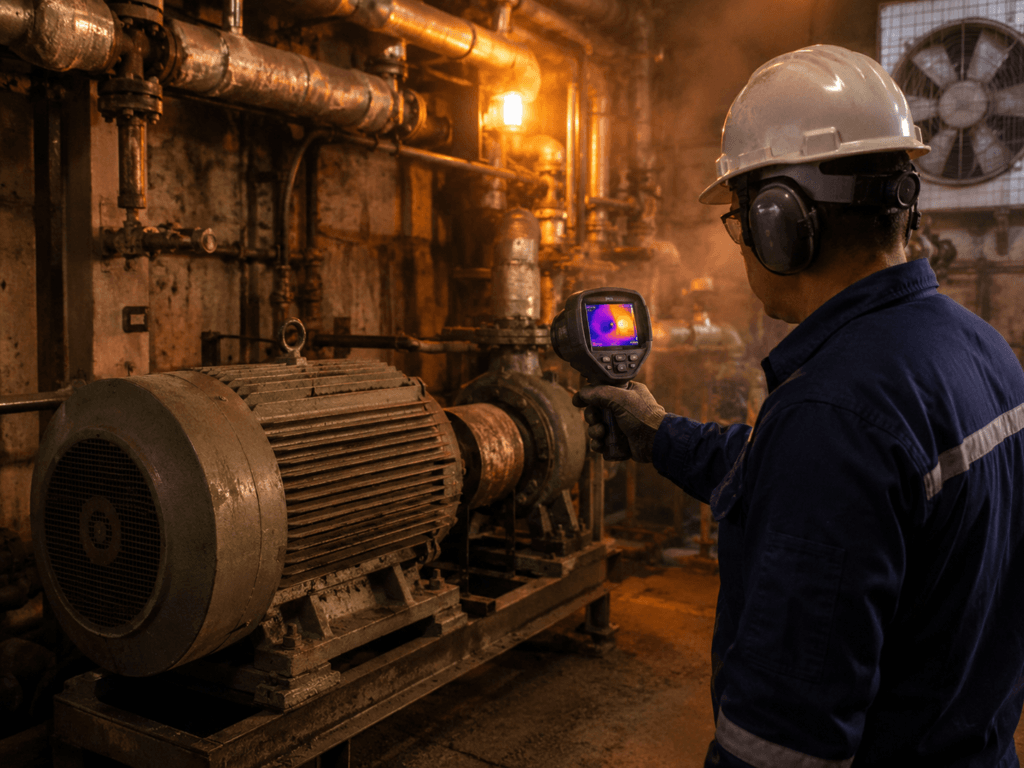
Sometimes the problem is not inside the motor.
Sometimes the motor is doing exactly what it normally does, but the surrounding conditions have changed.
Check whether the motor is installed:
- Near hot piping
- In a poorly ventilated room
- Inside an enclosure with poor air circulation
- Near furnaces, dryers, or process heat sources
- In direct sunlight outdoors
If the surrounding air is already hot, the motor has less ability to reject heat.
Normal current will not warn you about that.
4. Blocked Cooling Paths
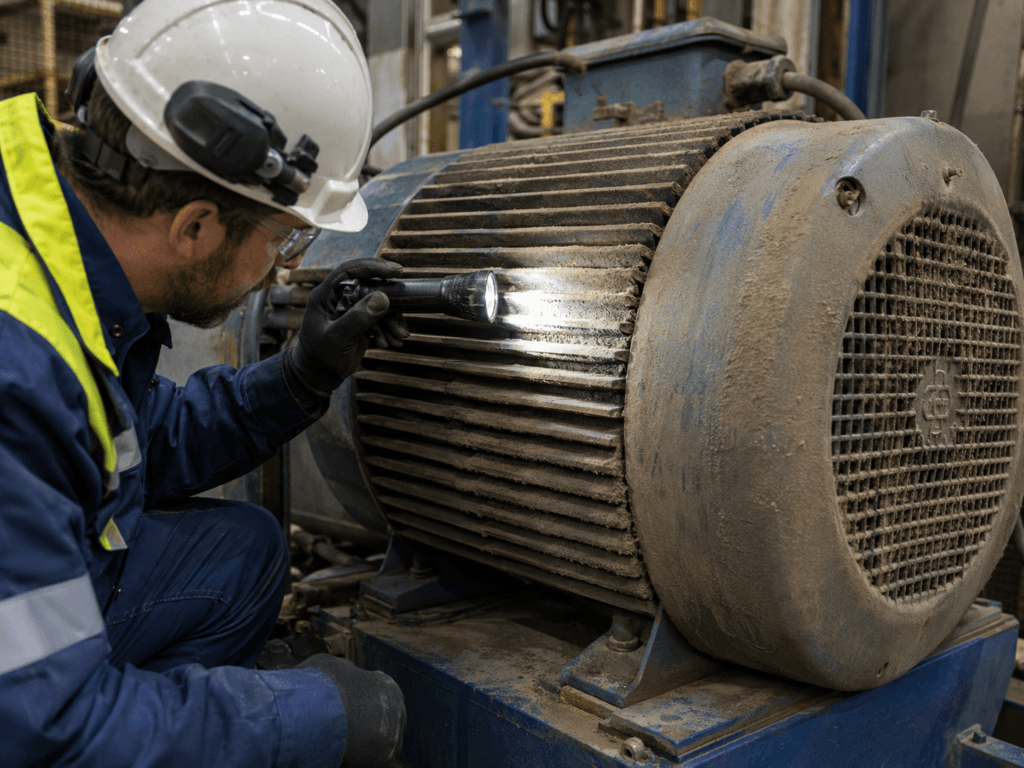
A motor can overheat simply because it cannot breathe.
Dust, pulp, powder, oil mist, or process residue can block the cooling fins and fan cover.
This is easy to miss in plants where contamination builds up gradually.
Check for:
- Dirty cooling fins
- Fan cover obstruction
- Heavy dust accumulation
- Oil and dirt layers acting like insulation
The motor may not be overloaded.
It may just be insulated by dirt.
5. Voltage Imbalance
Current may appear acceptable and still not tell the full story.
A small voltage imbalance can cause a larger current imbalance and additional heating in the motor windings.
Even when the current readings do not look dramatic, the internal heating effect can still be significant.
Check:
- Phase-to-phase voltage
- Voltage imbalance percentage
- Whether the issue appears during peak loading periods
- Upstream loose or deteriorated connections
If the supply is not healthy, the motor may pay for it thermally.
6. Mechanical Problems
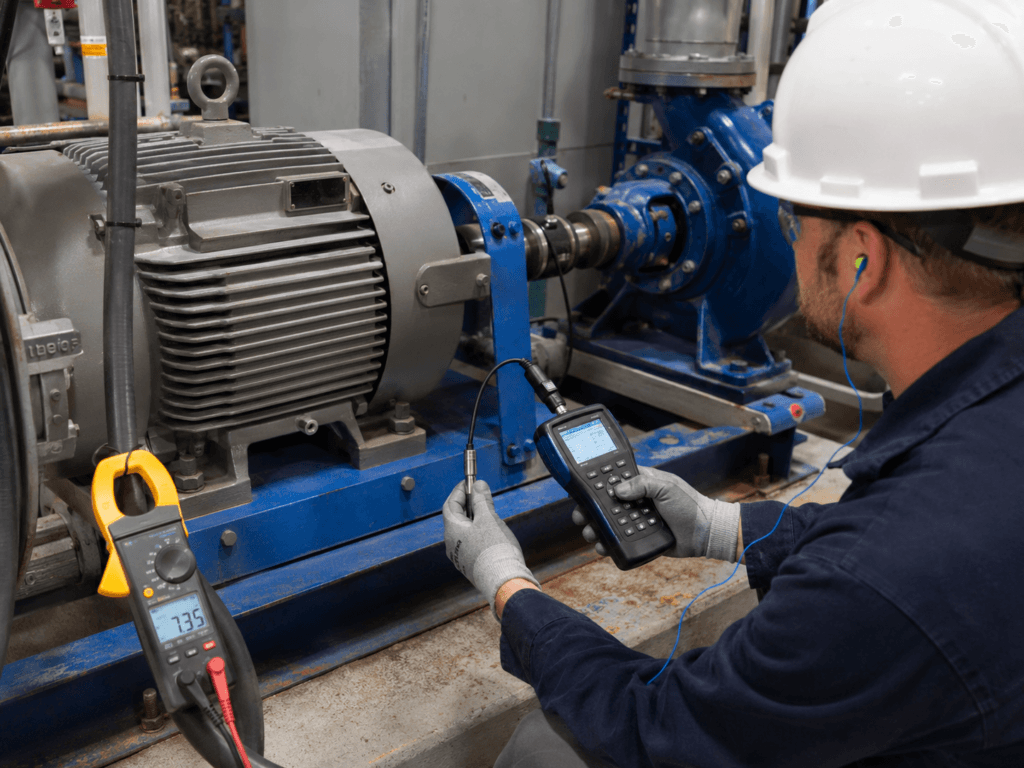
Overheating is not always caused by electrical stress alone.
Mechanical resistance can raise motor temperature even when the current is not obviously abnormal.
Possible causes include:
- Bearing deterioration
- Misalignment
- Coupling problems
- Excessive belt tension
- Poor lubrication
- Mechanical drag in the driven equipment
In some cases, the added friction is not enough to create a dramatic overcurrent condition, but it is enough to raise temperature over time.
7. Too Many Starts
A motor may run at normal current after it reaches speed and still overheat because of frequent starting.
Starting current and starting losses generate heat.
If the motor is started too often, the average thermal stress rises even though steady-state current looks normal when you arrive with your clamp meter.
Check:
- Number of starts per hour
- Start duration
- Whether the duty matches the motor design
- Whether process changes increased cycling frequency
The motor’s thermal history matters.
Not just the current you measured at one moment.
8. Wrong Temperature Assumption
Sometimes the motor is not actually overheating.
Sometimes the temperature is being judged incorrectly.
A warm housing may be normal depending on:
- Motor insulation class
- Rated temperature rise
- Ambient temperature
- Surface measurement location
- Emissivity issues in infrared readings
This does not mean the concern should be dismissed.
It means the temperature should be verified properly before the root cause search goes too far.
Check the actual data, not just the impression.
What to Check Next
When motor current looks normal but the motor still seems too hot, I would check in this order:
1. Verify the Temperature
Do not rely only on touch.
Use:
- An infrared camera
- An infrared thermometer
- Built-in RTD or thermistor signals
- Bearing temperature readings if available
Also ask:
- Where was the temperature measured?
- Is it the motor frame, bearing housing, terminal box, or surrounding area?
- What is the ambient temperature?
2. Compare Current and Voltage on All Three Phases
Check for:
- Current balance
- Voltage balance
- Trends over time
- Changes during loading or speed variation
A single reading is helpful.
A pattern is better.
3. Inspect the Cooling System
Look at:
- External fan condition
- Fan cover blockage
- Cooling fin cleanliness
- Ventilation around the motor
- Nearby heat sources
This step is often faster and more revealing than repeated electrical measurements.
4. Review the Operating Condition
Ask:
- Is the motor running below base speed on a VFD?
- Has the load changed recently?
- Has the process become more stop-start than before?
- Is the motor running longer than usual?
- Has ambient temperature increased seasonally?
A healthy motor can become thermally stressed if the duty changes.
5. Check the Mechanical Side
Inspect:
- Bearings
- Coupling alignment
- Lubrication condition
- Driven equipment resistance
- Unusual noise or vibration
The motor may be carrying a problem that started somewhere else.
Field Checklist
Before concluding that the motor is electrically healthy, ask:
- Is the temperature actually abnormal, or just perceived as high?
- Was the temperature measured correctly?
- Are all three currents and voltages balanced?
- Is the motor running at low speed on a VFD?
- Is the cooling fan intact and effective?
- Are the fins and air paths clean?
- Is the ambient temperature higher than normal?
- Has the number of starts increased?
- Is there a bearing, alignment, or load-side problem?
Final Thought
Normal current is useful information.
It is not the final answer.
A motor does not overheat only because of what happens electrically.
It also overheats because of cooling, environment, mechanical condition, and duty.
So when the current looks fine but the temperature does not, do not stop at the meter.
Look at the whole operating condition.