

Electrical engineering in the field is different from electrical engineering in a textbook.
In a textbook, drawings are clean.
Assumptions are clear.
Equipment conditions are usually defined.
The answer often exists somewhere in the chapter.
In the field, things are different.
A breaker may operate during production.
A motor may stop without an obvious reason.
An insulation value may look weak, but the equipment may still be running.
A cable, terminal, relay, sensor, or setting can become the small detail that decides whether the system stays online or shuts down.
That is the world I want to write about.
Electrical Field Notes is my attempt to turn practical field experience into clear engineering notes.
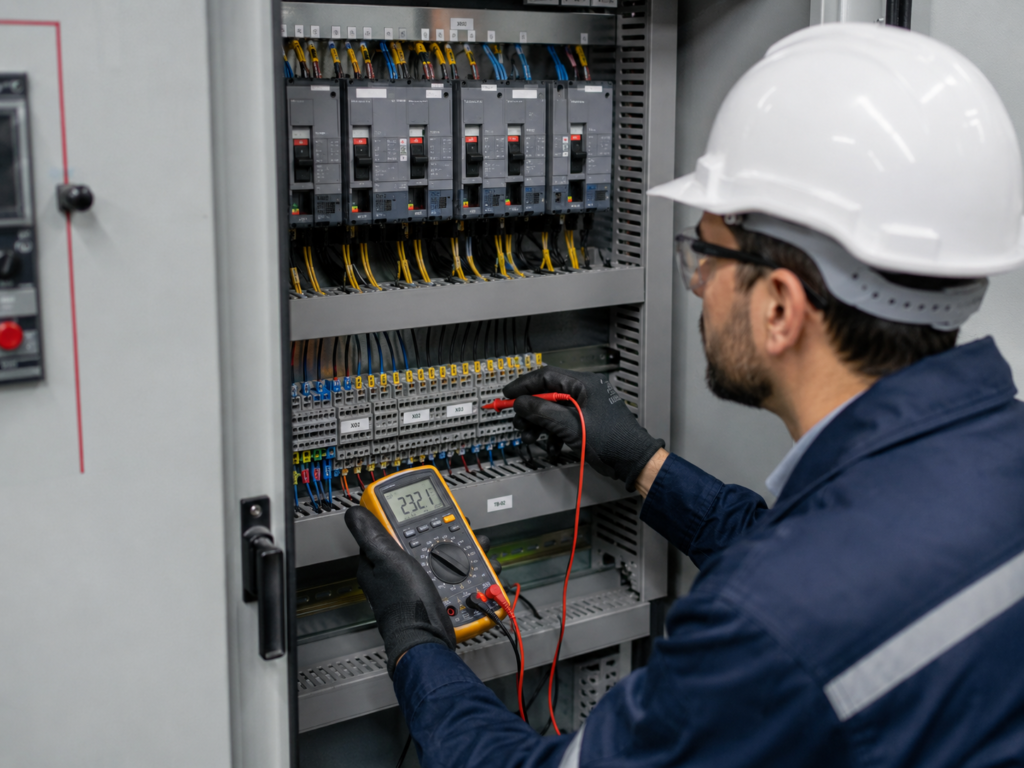
What This Blog Is About
Electrical Field Notes is a practical engineering blog about electrical engineering, industrial field work, maintenance, troubleshooting, and engineering judgment.
The main focus is electrical engineering.
I will also write about instrumentation, control systems, PLCs, VFDs, factory automation, commissioning, and lessons learned from real industrial sites.
This blog is not intended to replace engineering standards, vendor manuals, or formal design documents.
Instead, it is a field-oriented notebook.
The goal is simple:
to connect engineering theory with real problems from the field.
My Background
I am an electrical engineer with hands-on experience across electrical construction, manufacturing automation, and plant engineering.
My work has included building electrical, telecommunication, and fire protection construction management, overseas construction site experience, factory automation and control work in manufacturing, and electrical, instrumentation, project, and maintenance work in industrial plant environments.
Through these experiences, I have worked with power distribution, switchgear, breakers, motors, MCCs, VFDs, PLCs, instrumentation, field wiring, commissioning, maintenance, troubleshooting, and reliability improvement.
This combination of construction, manufacturing, automation, and plant maintenance shaped the way I think about engineering.
Good field engineering is not only about knowing technical theory.
It is also about understanding the site, asking better questions, and making practical decisions under real constraints.

Why Field Notes Matter
Many field problems are not solved by one big idea.
They are solved by small observations.
A drawing that was not updated.
A breaker setting that no one reviewed.
A cable route that changed during construction.
A weak insulation value that was ignored.
A repeated alarm that became normal to everyone.
A site condition that did not match the original design.
In the field, small details can become expensive when they are missed.
Writing those details down helps engineers think more clearly.
It also helps turn experience into reusable knowledge.
What I Want to Build
Electrical Field Notes is not only a blog.
It is a learning system.
Some posts will explain technical concepts.
Some posts will organize field lessons.
Some posts will review troubleshooting cases.
Some posts will reflect on engineering judgment, maintenance, construction, commissioning, and industrial work.
The writing may not be perfect at first.
But that is part of the process.
The first goal is not perfection.
The first goal is to publish, learn, and improve.
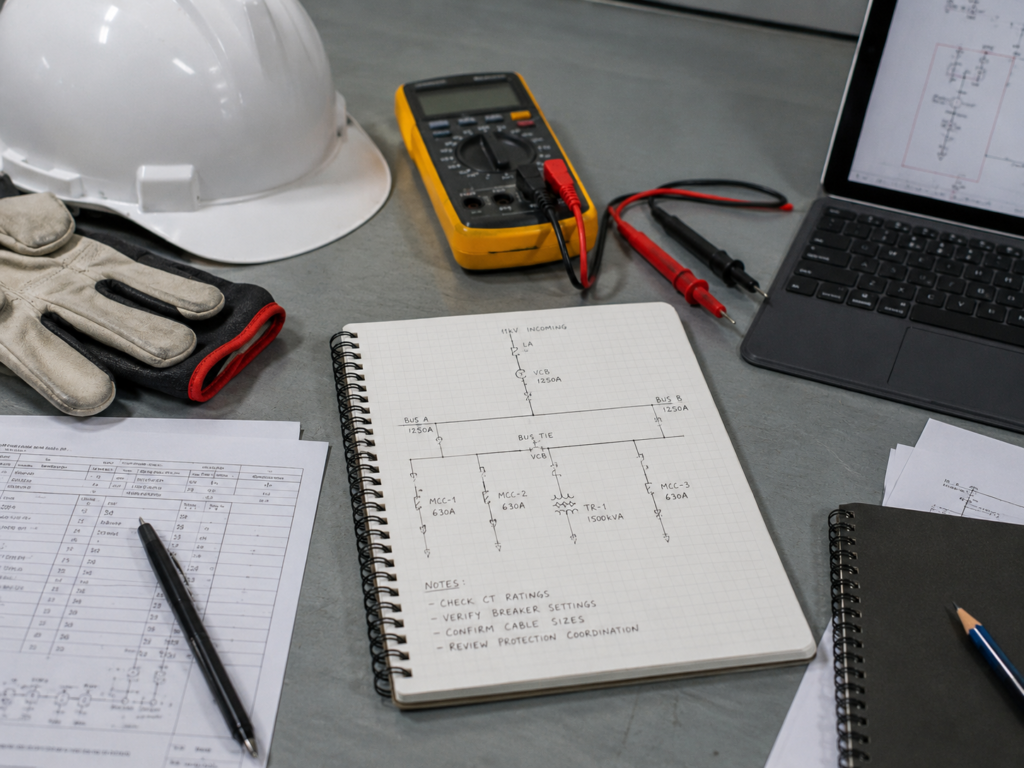
Topics I Plan to Cover
This site will gradually cover topics such as:
- Electrical power systems
- Power distribution
- Switchgear and breakers
- Motors and MCCs
- Grounding and insulation
- Protection and maintenance
- Instrumentation and control
- PLCs and VFDs
- Factory automation
- Construction and commissioning
- Field troubleshooting
- Engineering judgment from real work
Some topics will be basic.
Some will be practical.
Some will come from lessons learned the hard way.
That is exactly why they are worth writing down.
Final Note
Electrical engineering is often invisible when everything works.
But when something fails, everyone remembers how important it is.
This blog is my attempt to make those invisible lessons more visible, one practical note at a time.
Welcome to Electrical Field Notes.