
Critical Environment Electrical Engineering Series — Part 4
In the previous articles, we looked at UPS systems.
We discussed why a UPS is not just a battery backup. We also looked at UPS topologies and bypass design.
But a data center is not protected by a UPS alone.
A UPS is only one part of a larger electrical architecture.
To understand data center power systems, we need to zoom out.
The real question is not:
“Do we have a UPS?”
The better question is:
“How does power travel from the utility source to the critical load, and what happens when something fails?”
That is the starting point of critical power architecture.
Power Architecture Is More Than Equipment
A data center power system includes many components.
Utility feeders.
Medium-voltage switchgear.
Transformers.
Low-voltage switchgear.
UPS systems.
Battery systems.
Generators.
Automatic transfer systems.
Power distribution units.
Remote power panels.
Rack PDUs.
Monitoring systems.
Protection relays.
Control power.
Grounding and bonding.
It is easy to think of these as separate pieces of equipment.
But in a critical environment, they must be understood as one connected system.
The purpose of the architecture is not just to install reliable equipment.
The purpose is to deliver stable power to the critical load under normal operation, maintenance, disturbance, and failure conditions.
From Utility to Rack
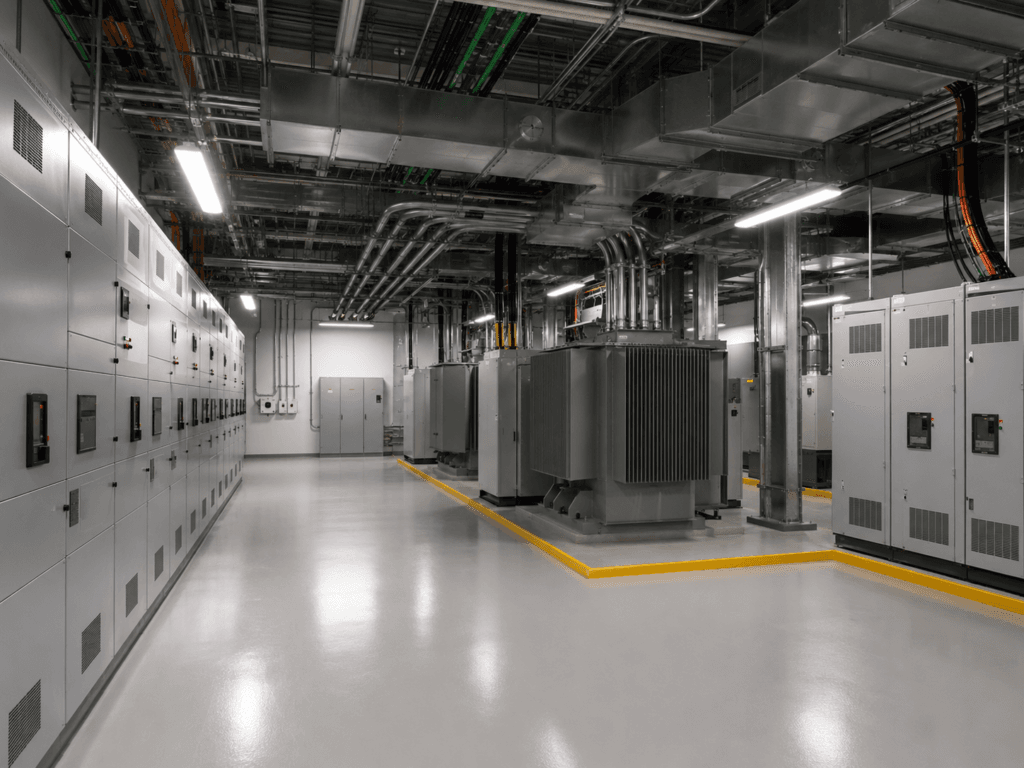
A simplified data center power path may look like this:
Utility source
→ Medium-voltage switchgear
→ Transformer
→ Low-voltage switchgear
→ UPS system
→ PDU or distribution board
→ Rack PDU
→ IT equipment
Of course, real facilities are more complex.
There may be dual utility feeds, multiple transformers, parallel UPS modules, generator systems, static transfer switches, busways, redundant distribution paths, and multiple levels of monitoring.
But the basic engineering question remains the same.
Where does the power come from?
How is it transformed?
How is it distributed?
How is it backed up?
How is it protected?
How is it maintained?
How does the load remain energized during failure?
A good architecture answers these questions clearly.
The Critical Load Is the Center
In ordinary electrical design, we may start from the incoming source and move downstream.
But in critical power design, it is often useful to start from the load.
What load must remain energized?
How much power does it require?
How sensitive is it to interruption?
Can it tolerate transfer time?
Does it have dual power supplies?
Can it be supported by two independent paths?
What happens if one path fails?
Data center electrical architecture should be built around the critical load.
The goal is not only to supply power.
The goal is to keep the load operating.
That difference changes the way we think about redundancy, protection, maintenance, and monitoring.
Redundancy Is About Paths, Not Just Equipment
Many people think redundancy means having extra equipment.
One extra UPS module.
One extra generator.
One extra transformer.
One extra feeder.
That is part of redundancy, but it is not enough.
A redundant component is useful only if the power path also supports the load when one component is removed or fails.
For example, a facility may have two UPS systems. But if both systems depend on the same upstream breaker, same control power source, same cooling system, or same distribution panel, the actual redundancy may be weaker than it appears.
This is why critical power architecture must review both components and paths.
The key question is:
“If this component or path is lost, does the critical load remain supported?”
If the answer is not clear, the architecture needs more review.
Maintainability Is Part of Reliability
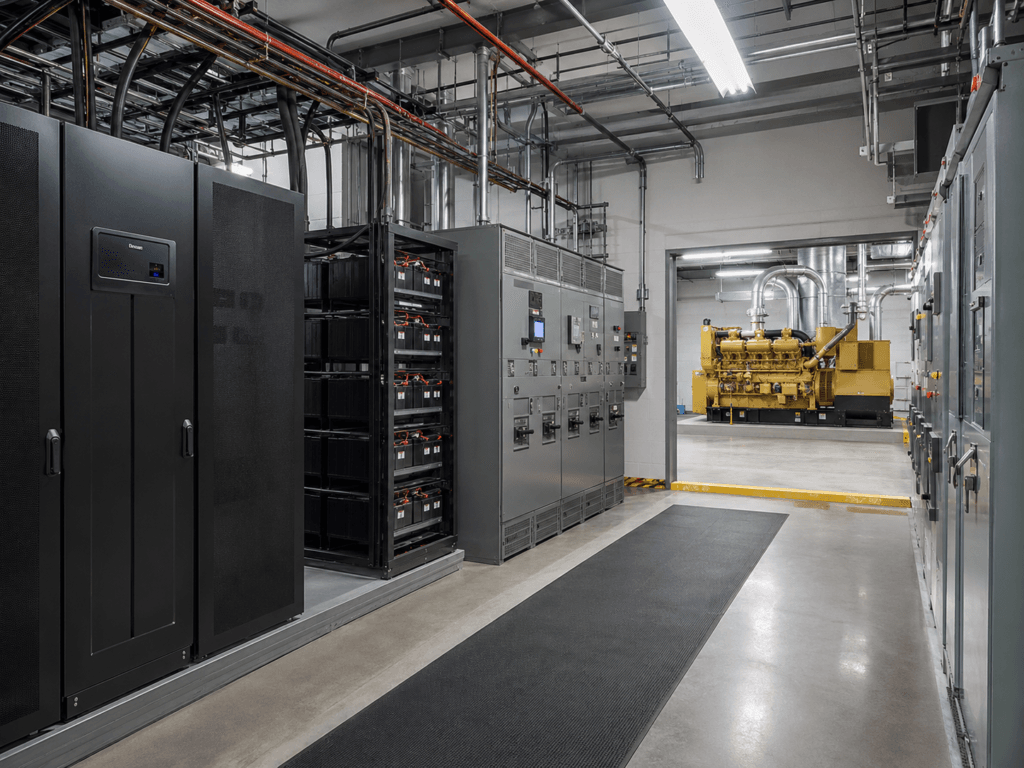
A system that cannot be maintained safely will eventually become unreliable.
This is especially true in data centers.
UPS modules need service.
Batteries need inspection or replacement.
Breakers need maintenance.
Generators need testing.
Transformers need monitoring.
Protection devices need verification.
Meters and sensors need calibration.
Connections need thermal inspection.
If maintenance requires shutting down the critical load, the architecture may not be suitable for a mission-critical environment.
That is why bypass paths, isolation points, tie breakers, redundant feeds, and clear operating procedures matter.
Critical power architecture should allow equipment to be maintained without unnecessary risk to the load.
Maintainability is not a secondary feature.
It is one of the core design requirements.
Protection and Selectivity Matter
A power system must not only deliver energy.
It must also isolate faults.
If a small downstream fault trips a large upstream breaker, the result can be much worse than the original problem.
This is why protection coordination is important.
Breakers, fuses, protection relays, ground fault protection, and control logic must be selected and set so that the fault is isolated as close to the problem as practical.
In a critical environment, this becomes even more important.
The system should not allow a minor fault to become a major outage.
Power architecture must consider fault current, breaker coordination, arc flash risk, grounding, and the impact of protective device operation on critical loads.
A reliable architecture is not only strong during normal operation.
It behaves predictably during abnormal conditions.
Monitoring Turns Architecture Into an Operating System

A data center power system cannot be managed only by looking at the physical equipment.
Operators need visibility.
They need to know the status of utility sources, UPS systems, battery strings, generators, breakers, meters, transformers, temperature, alarms, and power quality events.
This is where EPMS, SCADA, BMS, relay event logs, UPS logs, and power meters become important.
Monitoring does not replace good design.
But it allows the design to be operated intelligently.
Without monitoring, a facility may not know that a battery is degraded, a breaker has tripped, a UPS is on bypass, a generator failed to start, or a distribution path is overloaded.
In critical environments, information is also part of reliability.
Architecture Must Be Tested
A drawing can look perfect.
A single-line diagram can look logical.
The equipment can be high quality.
But the real test is operation.
What happens during a utility failure?
Does the UPS carry the load?
Does the generator start?
Does the transfer sequence work?
Does the system return to normal correctly?
What happens if one UPS module fails?
What happens if one feeder is isolated for maintenance?
What alarms appear?
Do operators understand the sequence?
Critical power architecture should be verified through commissioning and integrated system testing.
The design must work not only on paper, but also in the field.
A Field-Oriented Way to Look at Architecture
From a field engineering perspective, I like to ask simple questions.
Can I trace the power path from utility to rack?
Can I identify the critical load?
Can I see the normal source and alternate source?
Can I understand the bypass path?
Can I isolate equipment safely?
Can I maintain one component without shutting down the load?
Can I predict which breaker will trip during a fault?
Can I see alarms before failure becomes downtime?
Can operators follow the sequence during an emergency?
These questions are simple.
But they are powerful.
Many electrical failures are not caused by one bad device.
They are caused by weak interfaces, unclear paths, poor coordination, missing procedures, or assumptions that were never tested.
Closing
Critical power architecture for data centers is not just about selecting UPS systems, generators, switchgear, and transformers.
It is about designing the full power path.
From utility to rack.
From normal operation to failure.
From maintenance to recovery.
From equipment selection to operating procedure.
A good architecture answers one essential question:
“How will the critical load remain powered when the system is no longer in perfect condition?”
That is the real standard.
In the next article, we will look at how to read a data center electrical single-line diagram and use it to understand the power path more clearly.