
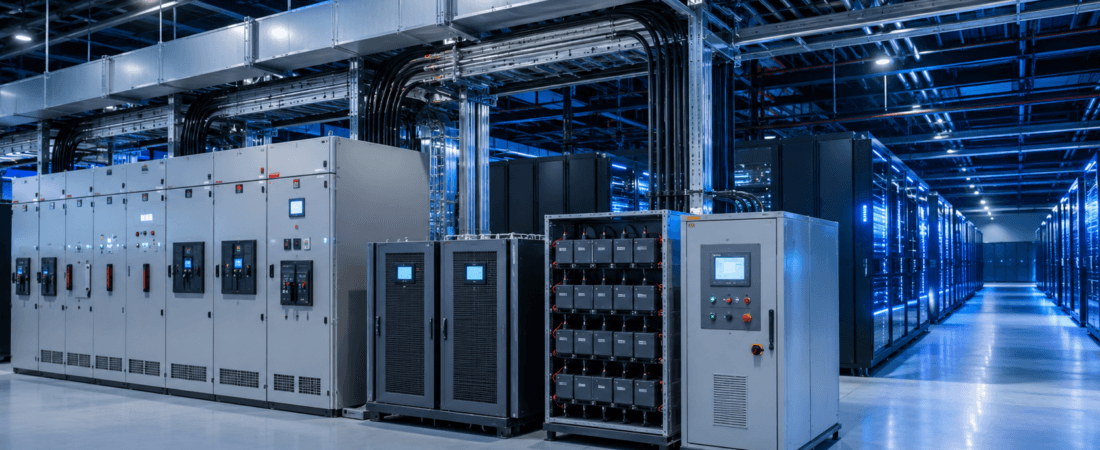
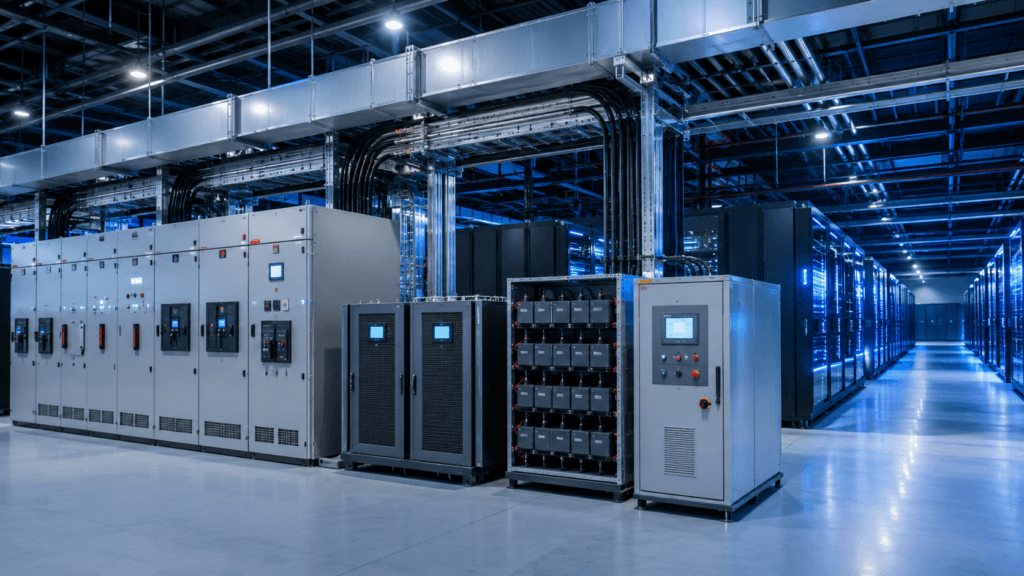
Critical Environment Electrical Engineering Series — Part 1
Most conversations about the AI era start with semiconductors, GPUs, and data centers.
That is understandable. Chips are visible. Server racks are impressive. AI models are exciting.
But behind every AI workload, there is something more fundamental.
Electricity.
AI does not run on GPUs alone. It runs on an electrical infrastructure that must be available, stable, redundant, and resilient. Without power, there is no computation. Without reliable power, there is no uptime.
This is why electrical engineering for critical environments is becoming increasingly important.
Data Centers Are Not Just IT Facilities
A modern data center is often discussed as an IT asset. However, from an engineering point of view, it is also a large electrical facility.
Power must be transmitted, transformed, received, distributed, conditioned, backed up, monitored, and protected. The electrical system is not just a supporting utility. It is one of the core systems that determines whether the facility can operate continuously.
Of course, power is not the only infrastructure required for data centers. Cooling water, chilled water systems, liquid cooling, HVAC equipment, nitrogen systems, fire protection, controls, and building management systems all play important roles.
Still, electricity remains the first layer of availability.
If the power system fails, everything else becomes secondary.
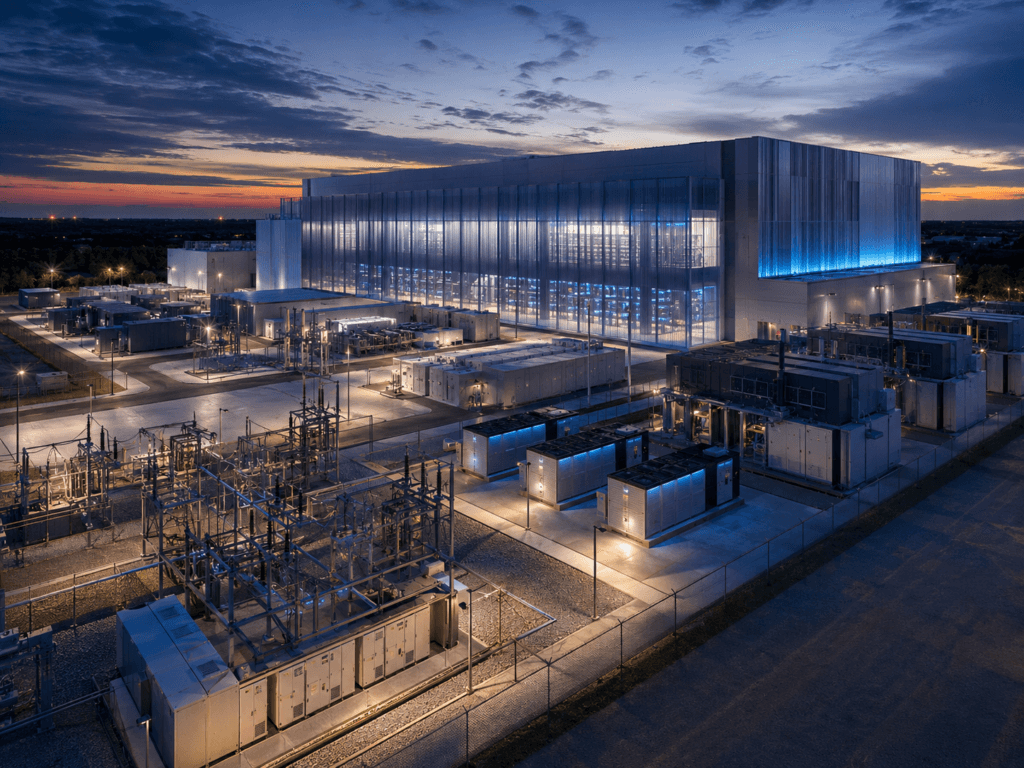
From Emergency Backup to Continuous Availability
In factories, commercial buildings, and conventional industrial facilities, emergency power systems have existed for a long time.
Typically, these systems were designed to support selected essential loads. Examples include emergency lighting, fire protection systems, elevators, control systems, safety-related equipment, and a limited number of critical process loads.
The common backup methods were relatively familiar:
- Diesel emergency generators
- UPS systems for selected control or IT loads
- Battery backup inside individual equipment
- Automatic transfer switches for emergency distribution
This approach was reasonable for many traditional facilities.
The objective was often to maintain safety, protect key equipment, and support minimum operation during a power failure.
But critical environments such as data centers require a different mindset.
The goal is not only to survive a blackout.
The goal is to prevent interruption.
Why Critical Environments Are Different
In a critical environment, even a short disturbance can matter.
A momentary voltage sag, a failed transfer sequence, a UPS malfunction, a protection coordination issue, or an unstable generator start can lead to service disruption, equipment stress, or operational risk.
That is why critical environment electrical design focuses on more than emergency backup.
It focuses on the entire power path.
From utility incoming feeders to medium-voltage switchgear, transformers, UPS systems, low-voltage distribution, power quality equipment, generators, battery systems, protection relays, and monitoring systems, every layer must be considered as part of one architecture.
The question is no longer:
“What equipment do we need when power fails?”
The better question is:
“How do we design the electrical system so that the load never experiences an unacceptable interruption?”
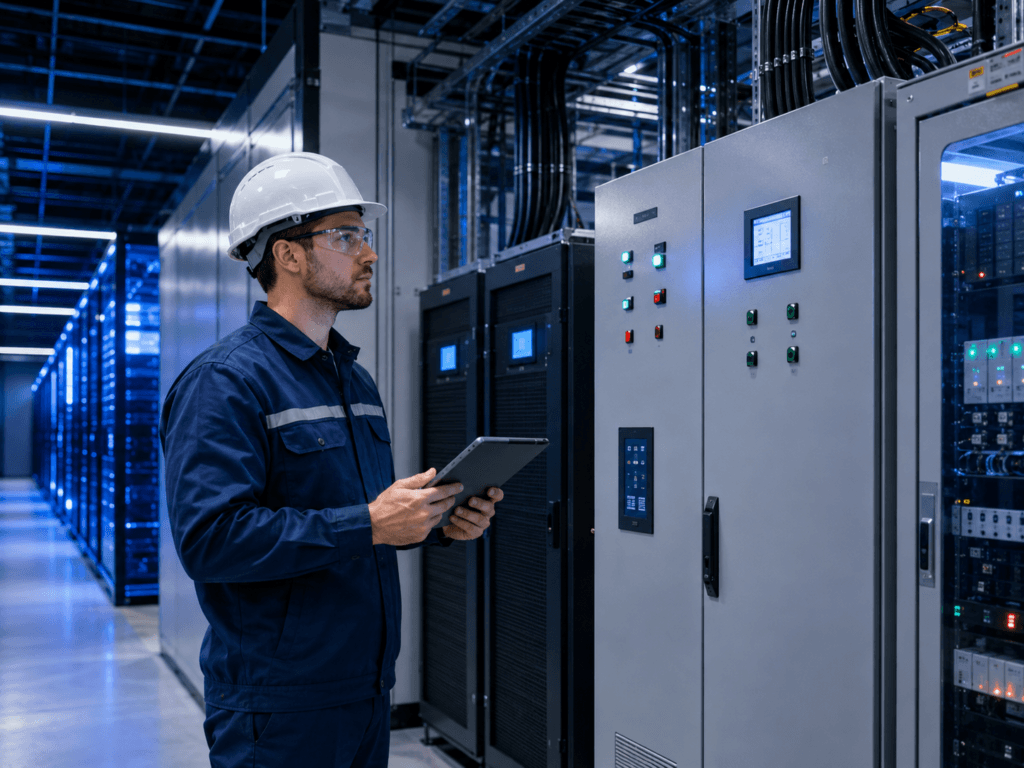
The New Direction of Critical Power Systems
As data centers become larger and more power-dense, critical power architecture is also evolving.
Traditional diesel generators and downstream UPS systems are still important. They remain part of many critical power designs.
However, new or more advanced solutions are becoming increasingly relevant, especially for large-scale data centers and AI infrastructure.
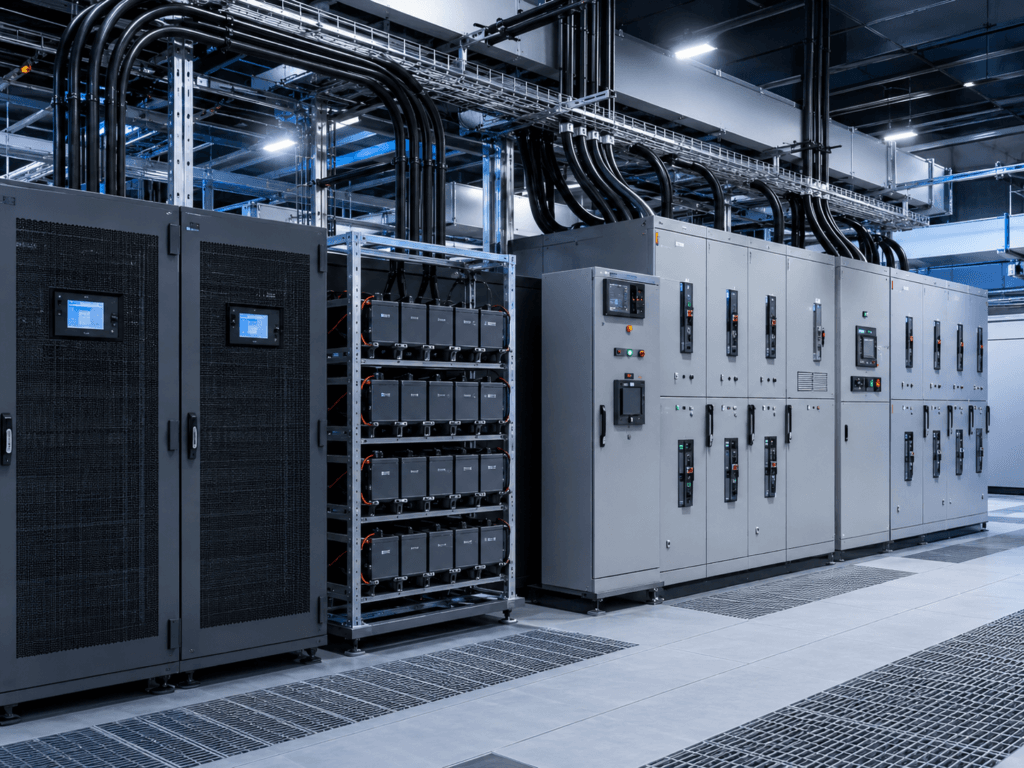
Some examples include:
1. Medium-Voltage or High-Voltage Centralized UPS Systems
Instead of placing UPS systems only near downstream loads, some designs consider larger centralized UPS architectures at a higher voltage level.
The purpose is to protect a broader section of the electrical distribution system and improve the continuity of power before disturbances reach downstream equipment.
This changes the role of UPS from a local backup device to a strategic part of the facility power architecture.
2. Gas Turbine Generators and Alternative Backup Power
Diesel generators have long been the default solution for data center backup power.
However, as power demand increases, some facilities are also reviewing gas turbines, gas engines, fuel cells, and other on-site generation options.
The discussion is no longer only about emergency runtime.
It also includes fuel logistics, emissions limits, grid constraints, operating cost, maintainability, and long-duration resilience.
3. Voltage Sag Protection
Not every power problem is a complete blackout.
In many facilities, voltage sags, momentary interruptions, and transient disturbances can be just as problematic as a full outage.
A Voltage Sag Protector, Dynamic Voltage Restorer, or similar power quality solution can help sensitive loads ride through short-duration disturbances without transferring the entire facility to backup generation.
For critical environments, power quality is not a luxury. It is part of reliability.
4. BESS — Battery Energy Storage Systems
Battery Energy Storage Systems are becoming more important in modern power infrastructure.
In a critical environment, BESS can potentially support several functions:
- Backup energy
- Peak shaving
- Load smoothing
- Grid support
- Renewable energy integration
- Power quality improvement
- Transition support between grid and generator operation
This does not mean BESS simply replaces UPS or generators.
Rather, it adds another layer of flexibility to the overall electrical system.
5. Protection, Coordination, and System-Level Testing
Advanced equipment alone does not create reliability.
A critical power system must also be properly engineered, coordinated, tested, and maintained.
Protection relay settings, short-circuit studies, arc flash studies, sequence of operation, transfer logic, UPS bypass scenarios, generator paralleling, load shedding, and integrated system testing are all essential.
In the field, many failures are not caused by the absence of equipment.
They are caused by weak interfaces between equipment.
That is where practical electrical engineering matters.
What This Series Will Cover
This article is the starting point of a new series:
Critical Environment Electrical Engineering
In this series, I will explore the electrical systems that support data centers and other mission-critical facilities.
Planned topics include:
- Critical power architecture for data centers
- UPS systems for critical environments
- Medium-voltage and high-voltage power distribution
- Diesel generators, gas turbines, and on-site generation
- Voltage sag protection and power quality
- BESS and grid-interactive power systems
- Protection coordination and fault isolation
- Redundancy concepts such as N, N+1, 2N, and distributed redundant systems
- Commissioning and integrated system testing
- Field lessons from industrial electrical maintenance and troubleshooting
This will not be written only from a textbook perspective.
My goal is to connect engineering theory with field reality.
Because in critical environments, reliability is not created by a single device.
It is created by architecture, details, operation, maintenance, and the people who understand the entire system.
Closing
The AI era is not only a semiconductor story.
It is also an infrastructure story.
And behind that infrastructure, electrical engineering is becoming one of the most important foundations.
Critical environments need power systems that are not just strong, but resilient.
That is what this series will explore.
Thank you for reading.
#CriticalPower #DataCenter #ElectricalEngineering #MissionCritical #PowerInfrastructure #UPS #BESS #AIInfrastructure